
Building a successful career does not happen by accident. Whether you are a high school student exploring future options, a college student preparing for employment, or a professional looking to advance, having clear goals can help you make better decisions and take meaningful action.
Career development goals provide direction by helping individuals identify where they want to go, what skills they need to develop, and what steps they should take to achieve long-term success.
Many people think career goals only mean getting a specific job title, such as becoming a manager, doctor, engineer, or business owner. However, career development goals are much broader. They can include improving skills, gaining experience, building professional relationships, earning certifications, changing careers, or becoming better at your current role.
For example, a college student may set a goal to complete an internship before graduation, while a working professional may focus on developing leadership skills to qualify for a promotion.
In this guide, we will explain what career development goals are, why they matter, different types of career goals, examples for students and professionals, how to create effective goals, and how to build a practical career development plan.
Quick Answer: What Are Career Development Goals?
Career development goals are specific objectives that help individuals improve their skills, knowledge, experience, and professional growth over time.
These goals can focus on:
- Learning new skills
- Advancing in a current career
- Exploring new career paths
- Gaining professional experience
- Improving workplace performance
- Preparing for future opportunities
Examples of career development goals include:
- Completing a professional certification
- Developing leadership skills
- Building industry-specific knowledge
- Getting an internship
- Improving communication abilities
- Moving into a higher-level position
Career development goals help people create a clear path instead of making career decisions without direction.
Before creating effective career goals, it is helpful to understand the stages of career development and how career priorities change as people move through different phases of their professional journey.
Key Takeaways
- Career development goals help individuals plan and manage professional growth.
- Goals should be specific, realistic, and connected to long-term career plans.
- Students can use career goals to guide education choices and gain experience.
- Professionals use career goals to improve skills, advance careers, and adapt to changes.
- Short-term goals focus on immediate progress, while long-term goals focus on future achievements.
- SMART goals make career development goals easier to track and achieve.
- Career goals should be reviewed and adjusted as interests, industries, and opportunities change.
What Are Career Development Goals?
Career development goals are planned objectives that help a person improve their career direction, professional abilities, and future opportunities.
They are different from general goals because they focus specifically on career growth.
For example:
A general goal:
“I want to improve myself.”
A career development goal:
“I want to improve my public speaking skills by joining a communication workshop within the next three months.”
The second goal provides:
- A clear outcome
- A specific skill area
- A timeline
- A way to measure progress
Career development goals can apply to every stage of life.
A high school student may set goals related to career exploration, while a professional may set goals related to leadership or advancement.
To create meaningful goals, individuals first need to understand what is career development and how continuous learning, experience, and skill improvement contribute to professional growth.
Why Are Career Development Goals Important?
Career development goals help people make intentional decisions about their education, skills, and professional future.
Without clear goals, individuals may spend years gaining experience without understanding whether they are moving toward their desired career path.
Different career development models explain how people make career decisions, identify their strengths, and create professional paths that align with their interests and abilities.
1. Career Goals Provide Direction
One of the biggest benefits of career development goals is that they provide a sense of direction.
For example:
A student interested in technology may set goals such as:
- Learning programming fundamentals
- Building software projects
- Completing technology internships
These goals create a clear path toward a possible technology career.
2. Career Goals Help Identify Required Skills
Different careers require different skills.
Career development goals help individuals identify what they need to improve.
For example:
A person interested in becoming a project manager may need to develop:
- Leadership skills
- Communication skills
- Planning abilities
- Team management experience
By identifying these requirements early, individuals can prepare more effectively.
3. Career Goals Improve Motivation
Large career ambitions can sometimes feel overwhelming.
Breaking them into smaller goals makes progress easier.
For example:
Long-term goal:
Become a healthcare administrator.
Short-term goals:
- Complete healthcare courses
- Gain administrative experience
- Develop leadership skills
- Build professional connections
Small achievements create momentum toward larger career goals.
4. Career Goals Support Professional Growth
Career development does not stop after finding a job.
Professionals continue improving through:
- Training
- Certifications
- New responsibilities
- Networking
- Leadership opportunities
For example:
A marketing professional may set a goal to learn search engine optimization, analytics tools, and digital advertising platforms to expand career opportunities.
5. Career Goals Help With Career Changes
Many people change careers during their professional lives.
Career development goals make transitions easier by helping individuals identify:
- Transferable skills
- Required training
- New opportunities
- Learning priorities
For example:
A teacher transitioning into corporate training may identify existing skills such as:
- Communication
- Presentation
- Organization
- Instruction
Then they can set goals to learn business-related skills.
Types of Career Development Goals
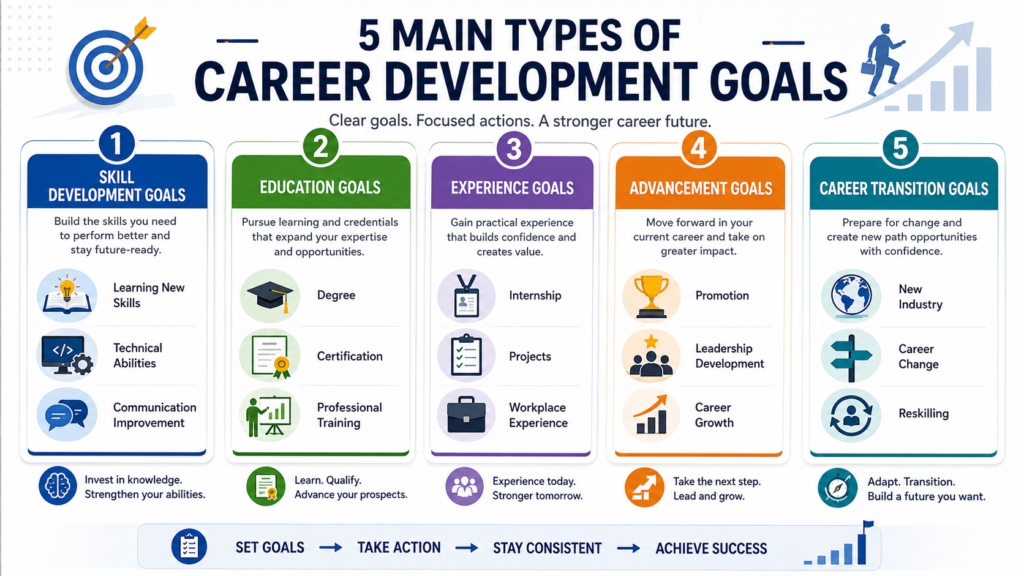
Career development goals can be divided into different categories depending on what a person wants to improve.
Skill Development Goals
Skill development goals focus on improving abilities needed for career success.
These may include:
Technical Skills
Examples:
- Learning programming languages
- Improving data analysis skills
- Learning industry software
- Understanding digital tools
Soft Skills
Examples:
- Communication
- Leadership
- Teamwork
- Problem-solving
- Time management
Example:
A college student studying business may set a goal to improve presentation skills by participating in group projects and public speaking activities.
Education and Learning Goals
Education-related goals focus on gaining knowledge and qualifications.
Examples:
- Completing a degree
- Earning a certification
- Taking professional courses
- Learning a new subject area
For example:
A finance professional may set a goal to earn a financial certification to improve career opportunities.
Experience-Based Goals
Experience goals focus on gaining practical exposure.
Examples:
- Completing an internship
- Joining professional organizations
- Working on industry projects
- Volunteering in a relevant field
Experience is especially important for students because employers often value practical skills alongside academic qualifications.
Advancement Goals
Advancement goals focus on moving forward in a career.
Examples:
- Getting promoted
- Moving into management
- Taking leadership responsibilities
- Becoming a subject expert
For example:
A software developer may set a goal to become a senior developer by improving technical expertise and mentoring junior team members.
Career Transition Goals
Career transition goals help individuals prepare for a new professional direction.
Examples:
- Changing industries
- Learning new skills
- Building a new professional network
- Completing additional education
Career transitions require planning because individuals often need to develop skills that match their new career field.
Short-Term vs Long-Term Career Development Goals
Career development goals can be divided into short-term and long-term goals based on the amount of time and effort required to achieve them.
Both types of goals are important because short-term goals create immediate progress, while long-term goals provide overall career direction.
Short-Term Career Goals
Short-term career goals are objectives that can usually be achieved within a few months to a few years.
These goals focus on building skills, gaining experience, and creating a foundation for future growth.
Examples of short-term career goals include:
- Completing an internship
- Improving communication skills
- Learning a new software program
- Updating a resume
- Building a professional portfolio
- Completing an online course
- Expanding professional knowledge
For example:
A college student interested in marketing may create short-term goals such as:
- Complete a digital marketing course
- Create two portfolio projects
- Apply for marketing internships
- Improve presentation skills
These smaller goals help prepare the student for larger career objectives.
Long-Term Career Goals
Long-term career goals focus on major achievements that may take several years to accomplish.
These goals provide a bigger picture of where a person wants their career to go.
Examples include:
- Becoming a manager
- Starting a business
- Becoming an industry specialist
- Changing career fields
- Earning an advanced degree
- Moving into leadership positions
For example:
A software engineering student may have a long-term goal of becoming a technology manager.
To reach that goal, they may create smaller goals such as:
- Learn programming skills
- Gain developer experience
- Improve leadership abilities
- Manage technology projects
Long-term goals become easier to achieve when they are divided into smaller action steps.
Short-Term vs Long-Term Career Goals
| Short-Term Career Goals | Long-Term Career Goals |
| Focus on immediate improvement | Focus on future achievements |
| Usually completed within months or a few years | May take several years |
| Build skills and experience | Create career direction |
| Easier to measure quickly | Require long-term planning |
| Examples: certifications, internships, training | Examples: leadership roles, career changes, promotions |
Both types of goals work together.
Short-term goals provide the actions needed to achieve long-term career success.
What Are SMART Career Development Goals?
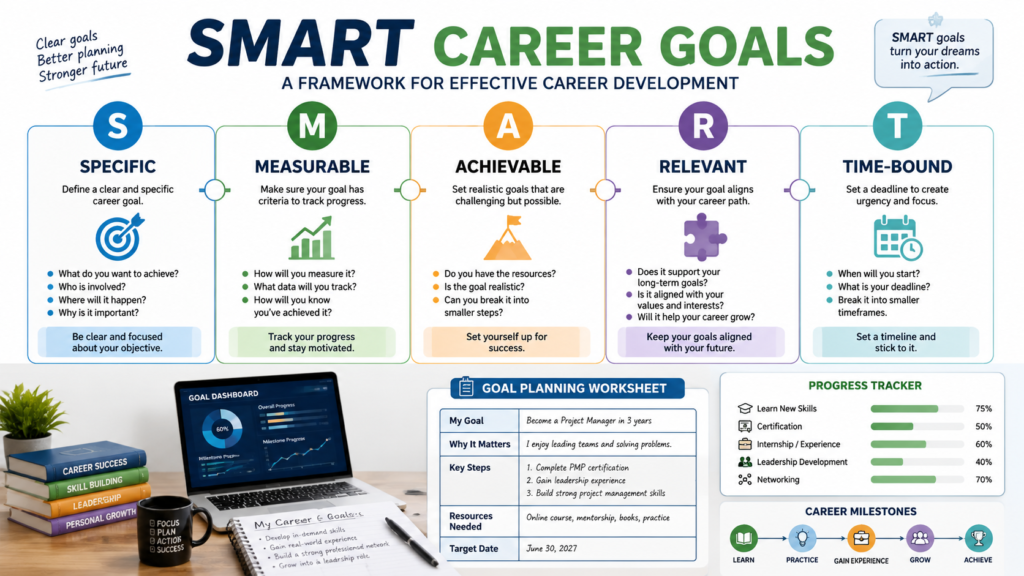
One of the most effective methods for creating career goals is the SMART goal framework.
SMART goals are:
- Specific
- Measurable
- Achievable
- Relevant
- Time-bound
This approach helps transform general ambitions into clear action plans.
Specific
A goal should clearly explain what you want to achieve.
Weak goal:
“I want to improve my skills.”
Better goal:
“I want to improve my Excel and data analysis skills by completing an advanced Excel course.”
A specific goal removes confusion and provides clear direction.
Measurable
A goal should include a way to track progress.
Example:
Instead of:
“I want to improve networking.”
A measurable goal would be:
“I will attend three professional networking events this year and connect with at least five industry professionals.”
Measurable goals help individuals understand whether they are making progress.
Achievable
Career goals should be challenging but realistic.
For example:
A college student may not become a company executive immediately after graduation, but they can set achievable goals such as:
- Completing an internship
- Developing leadership skills
- Building industry experience
Realistic goals create consistent progress.
Relevant
Career goals should connect with your long-term career direction.
Example:
A student interested in healthcare should focus on goals related to:
- Science courses
- Healthcare experience
- Professional certifications
A goal should support your overall career path.
Time-Bound
Every goal should have a deadline.
Example:
Instead of:
“I want to learn programming.”
A time-based goal:
“I will complete an introductory Python course within four months.”
Deadlines encourage action and accountability.
Examples of SMART Career Development Goals
Example 1: Student Career Goal
General goal:
“I want to prepare for my future career.”
SMART goal:
“I will complete a summer internship in my chosen field before my final year of college to gain practical experience.”
Example 2: Skill Development Goal
General goal:
“I want to improve my communication skills.”
SMART goal:
“I will participate in a public speaking workshop and deliver at least three presentations within six months.”
Example 3: Professional Growth Goal
General goal:
“I want to advance in my career.”
SMART goal:
“I will develop leadership skills by completing a management training program within one year.”
Career Development Goal Examples for Students
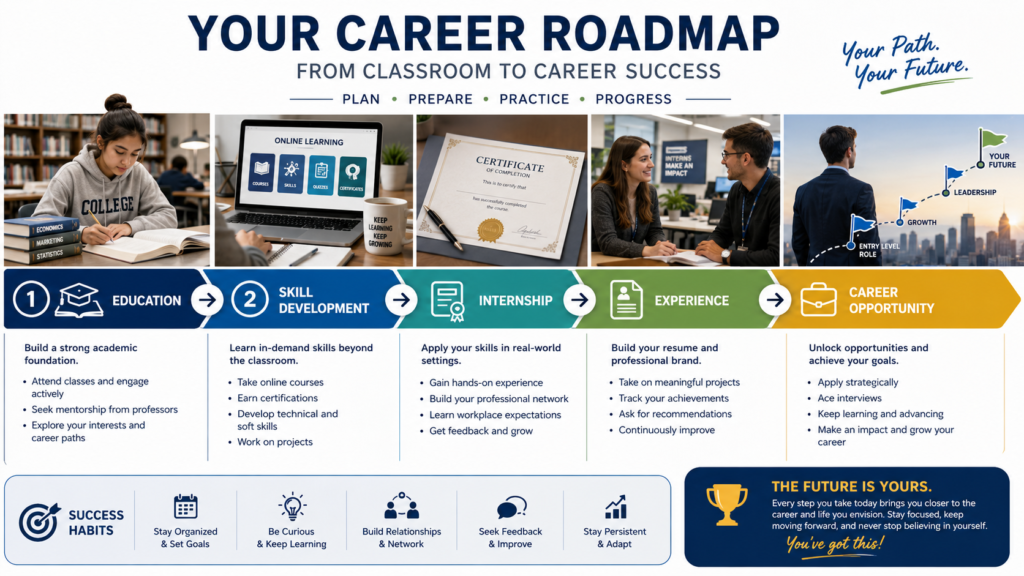
Students can use career goals to prepare for future opportunities.
Students can make better progress toward academic and career goals by developing strong organization habits through practical time management activities for high school students.
High School Student Career Goals
School students can focus on exploration and preparation.
Examples:
- Research three possible career paths
- Improve academic performance in important subjects
- Participate in career-related clubs
- Volunteer in a field of interest
- Develop communication skills
Example:
A student interested in healthcare may set a goal to volunteer at a local healthcare organization and research different medical careers.
For students preparing for future career opportunities, improving academic performance can also support long-term goals, and strategies like how to boost my grades can help build stronger study habits.
College Student Career Goals
College students should focus on connecting education with career preparation.
Examples:
- Complete an internship
- Build a professional resume
- Develop technical skills
- Attend career fairs
- Create professional connections
- Complete relevant projects
Example:
A computer science student may set a goal to build a portfolio of software projects before graduation.
Recent Graduate Career Goals
Recent graduates often focus on entering the workforce and developing professional skills.
Examples:
- Secure an entry-level position
- Improve interview skills
- Build professional networks
- Learn industry tools
- Find a mentor
Example:
A recent business graduate may set a goal to connect with five industry professionals each month while applying for positions.
Career Development Goal Examples for Professionals
Professionals create goals to improve performance, advance careers, and adapt to workplace changes.
Leadership Development Goals
Examples:
- Improve team management skills
- Learn conflict resolution
- Mentor junior employees
- Take leadership responsibilities
Skill Improvement Goals
Examples:
- Learn new technology
- Complete professional certifications
- Improve industry knowledge
- Develop specialized expertise
Career Advancement Goals
Examples:
- Prepare for promotion
- Take on larger projects
- Improve professional visibility
- Develop management skills
Career Change Goals
Examples:
- Research a new industry
- Complete required training
- Build transferable skills
- Connect with professionals in the new field
How to Create a Career Development Plan
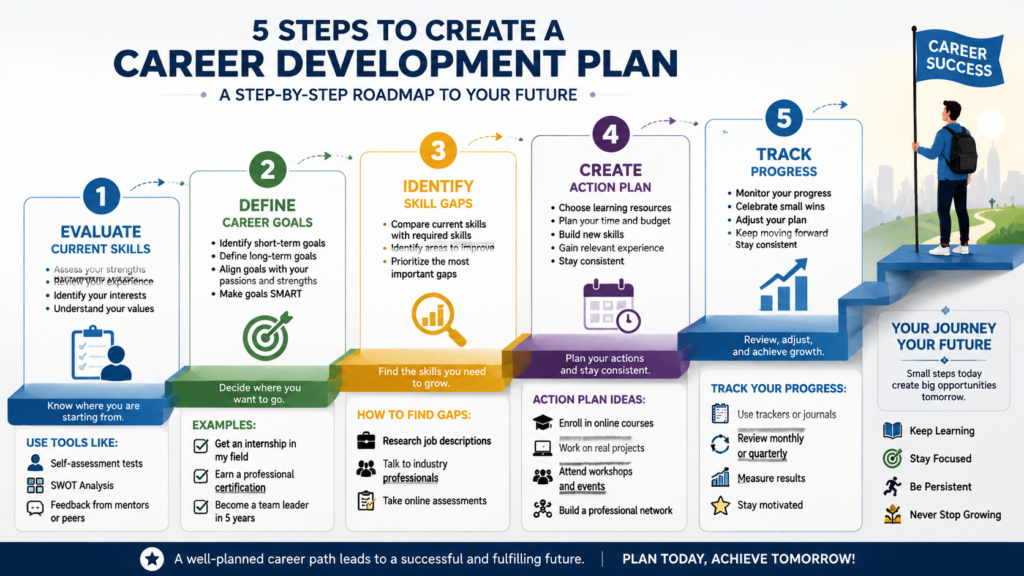
A career development plan turns goals into practical actions.
It helps individuals understand:
- Where they are currently
- Where they want to go
- What steps they need to take
Step 1: Identify Your Current Position
Start by evaluating:
- Current skills
- Education level
- Work experience
- Strengths
- Areas for improvement
Ask yourself:
- What skills do I already have?
- What career areas interest me?
- What do I need to improve?
Step 2: Define Your Career Direction
Identify the career path you want to explore.
Consider:
- Your interests
- Your strengths
- Industry opportunities
- Required qualifications
Research different career options before making decisions.
Step 3: Identify Skill Gaps
Compare your current abilities with the skills required for your desired career.
Example:
A person interested in digital marketing may identify gaps in:
- Analytics
- Search marketing
- Content strategy
- Advertising platforms
Recognizing skill gaps helps create focused development goals.
Step 4: Create Action Steps
Turn goals into specific actions.
Example:
Career Goal:
Become qualified for a project management position.
Action steps:
- Complete project management training
- Learn project management software
- Gain team leadership experience
- Apply for project-related roles
Step 5: Track and Review Progress
Career development requires regular evaluation.
Review:
- Completed goals
- New skills
- Career opportunities
- Areas needing improvement
Adjust goals when necessary.
Career plans should evolve as people gain experience and discover new opportunities.
Common Career Development Goal Mistakes
Setting career development goals is an important step toward professional growth, but many people struggle because their goals are unclear, unrealistic, or disconnected from their actual career direction.
Understanding common mistakes can help students and professionals create better career plans.
Setting Goals Without a Clear Career Direction
One common mistake is creating goals without understanding how they connect to a future career path.
For example:
A student may decide to learn random skills because they seem popular but never consider whether those skills support their desired career.
A better approach is:
- Identify career interests
- Research required skills
- Create goals that support that direction
Career goals are more effective when they connect with a larger career plan.
Creating Goals That Are Too General
Goals that are too broad are difficult to measure.
Example:
General goal:
“I want to become successful.”
This does not explain:
- What success means
- What actions are required
- How progress will be measured
A better goal:
“I want to develop leadership skills by completing a management course and leading a team project within the next year.”
Specific goals make progress easier to track.
Setting Unrealistic Expectations
Career growth takes time.
Some individuals create goals that are difficult to achieve within their current situation.
Example:
A recent graduate may want to become a senior manager immediately after starting their first job.
A more realistic approach would be:
- Gain entry-level experience
- Develop professional skills
- Take on additional responsibilities
- Progress toward leadership roles
Realistic goals create steady progress.
Ignoring Skill Development
Some people focus only on job titles instead of developing the skills needed to reach those positions.
For example:
A person may want to become a marketing manager but ignore the importance of developing:
- Communication skills
- Data analysis
- Leadership abilities
- Strategic thinking
Career advancement depends on continuous improvement.
Focusing Only on Short-Term Goals
Short-term goals are important, but they should support long-term career objectives.
Example:
Short-term goal:
Complete a certification.
Long-term goal:
Qualify for a specialized career role.
Without a long-term direction, short-term achievements may not create meaningful career progress.
Not Reviewing Career Goals
Career goals should not remain unchanged forever.
Goals may need adjustment because:
- Interests change
- Industries evolve
- New opportunities appear
- Personal circumstances change
Regularly reviewing goals helps individuals stay aligned with their career direction.
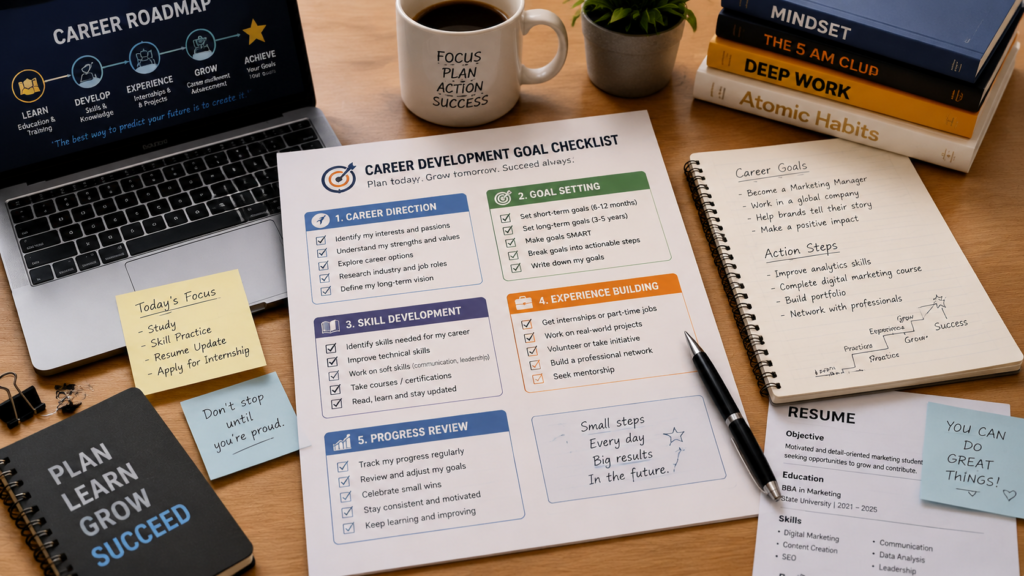
Career Development Goal Checklist
Use this checklist to create and evaluate your career development goals.
Career Direction Checklist
☐ Identify your career interests
☐ Understand your strengths and abilities
☐ Research possible career paths
☐ Learn about industry requirements
☐ Define your professional priorities
Goal Setting Checklist
☐ Create specific goals
☐ Make goals measurable
☐ Set realistic deadlines
☐ Connect goals with career plans
☐ Break large goals into smaller steps
Skill Development Checklist
☐ Identify required skills
☐ Improve technical abilities
☐ Develop communication skills
☐ Build leadership capabilities
☐ Continue professional learning
Experience Checklist
☐ Complete internships or projects
☐ Gain practical experience
☐ Build professional connections
☐ Learn from mentors
☐ Apply knowledge in real situations
Progress Review Checklist
☐ Track completed goals
☐ Review career progress
☐ Update skills regularly
☐ Adjust goals when needed
☐ Celebrate achievements
Final Thoughts
Career development goals provide a roadmap for building a successful and meaningful professional future.
Whether you are a student choosing a career direction, a recent graduate entering the workforce, or an experienced professional seeking growth, clear goals can help you make better decisions and take purposeful action.
The most effective career goals are not simply about achieving a job title. They focus on continuous improvement, skill development, learning, and adapting to new opportunities.
A successful career is built through consistent progress. By identifying your goals, developing the right skills, gaining experience, and reviewing your progress, you can create a career path that supports your long-term ambitions.
Start by identifying where you are today, where you want to go, and the next practical step that can move you closer to your career goals.
Need Support Managing Your Online Learning Goals?
Building career skills often requires balancing education, coursework, and professional preparation. Students managing online classes and academic responsibilities can benefit from reliable guidance and organization support.
Explore professional online course assistance options to manage coursework effectively while focusing on your long-term education and career goals.
FAQS
Career development goals are specific objectives that help individuals improve their skills, knowledge, experience, and professional growth. They may include learning new skills, earning certifications, gaining experience, advancing careers, or preparing for career changes.
Career development goals provide direction and help individuals make intentional decisions about education, skills, and professional growth.
They help people:
Identify what they need to improve
Create action plans
Measure progress
Prepare for future opportunities
Examples include:
Completing a professional certification
Improving leadership skills
Getting an internship
Learning new technology
Building professional connections
Preparing for a promotion
The best goals depend on a person’s career stage and future plans.
Short-term career development goals are objectives that can usually be completed within months or a few years.
Examples include:
Learning a new skill
Completing training
Building a resume
Gaining work experience
These goals help create progress toward larger career objectives.
Long-term career development goals focus on major professional achievements that may take several years.
Examples include:
Becoming a manager
Starting a business
Changing careers
Becoming an industry specialist
Reaching a leadership position
Effective career goals should follow the SMART framework:
Specific
Measurable
Achievable
Relevant
Time-bound
This makes goals easier to understand, track, and complete.